


In today’s globalized world, communicating across cultures and languages is essential. Businesses...
The conversation about AI in language learning is often too superficial. Much of the market still talks about speed, automation, and convenience as if access to more digital content were the same as real progress. It is not.
Adults do not become stronger communicators because they have seen more exercises, more vocabulary lists, or more generated text. They improve when they actively use language, receive focused feedback, revisit it over time, and can see that their performance is changing in meaningful ways.
That distinction matters even more in the workplace. For professionals, language learning is not an abstract academic goal. It is the ability to contribute in meetings, handle customer conversations, present ideas clearly, write with precision, and collaborate across countries and cultures without hesitation.

This is why AI matters. Not because it replaces language learning, and not because it replaces teachers, but because it can finally solve one of the biggest barriers in adult development: the gap between knowing a language and being able to use it confidently, consistently, and under pressure.
Why AI is changing language learning in 2026?
For years, language training has struggled with the same tension. Learners need repetition, speaking time, and continuity, but busy professionals often do not have enough opportunities to practise between lessons. They attend a session, understand the material, and then return to work with too little active use to make new language feel automatic.
AI changes that equation when it is used well.
It gives learners a way to keep practising between live sessions, to rehearse business situations before they happen, and to speak more often without waiting for the next scheduled lesson. That matters because fluency is not built through occasional exposure. It is built through repeated retrieval, repeated production, and repeated adjustment.
In other words, the value of AI in language learning is not that it makes training look modern. It is that it can increase the volume of meaningful practice in a way that fits the reality of adult working lives.
What adults actually need in order to improve?
The strongest language programmes are not built around novelty. They are built around how adults learn.
Adults progress when training includes active language use rather than passive consumption. They progress when practice is distributed over time instead of compressed into bursts. They progress when feedback is specific enough to show what to improve next. And they progress faster when the learning is tied directly to the situations they face at work.

That is why effective language learning for professionals needs more than content. It needs structure.
A learner should know their starting point. They should understand what level they are working at, what communication goals matter most for their role, and what better performance actually looks like. They should practise in realistic situations, not in generic exercises detached from their job. And they should be able to see movement over time, not just completion.
AI becomes powerful when it strengthens that learning architecture instead of distracting from it.
The smartest role for AI in language learning
The strongest use of AI in language learning is not endless explanation. It is guided speaking practice.
Professionals often understand more than they can comfortably produce. They know the words, but they hesitate. They can follow a conversation, but they struggle to enter it. They know what they want to say, but not quickly enough in the moment that matters.
This is where AI-supported speaking practice becomes highly valuable. It creates a low-pressure environment where learners can rehearse, repeat, self-correct, and build fluency before they step into a live meeting, presentation, or client conversation. It gives them more speaking time, which is one of the most important ingredients in faster progress.
It also helps reduce a problem that many professionals carry for years: speaking anxiety. A safe practice environment makes it easier to experiment, make mistakes, and try again. That does not just improve output. It changes confidence.
Used in this way, AI is not a shortcut. It is a multiplier of practice.
Is AI alone enough?
There is also a limit to what AI can do on its own.
Language learning is not only about producing sentences. It is about judgment, relevance, timing, clarity, nuance, and appropriateness. In professional settings, learners need to know how direct to be, how to sound credible, how to adapt tone, how to handle disagreement diplomatically, and how to express complexity without losing clarity.
These are not small details. They are the difference between speaking correctly and communicating effectively.
That is why human teaching still matters so much. A skilled teacher can diagnose what is really holding a learner back, adapt the lesson in real time, choose the right task for the learner’s role, and give feedback that improves not just grammar but performance. A strong teacher can turn language practice into workplace readiness.
The future, then, is not AI versus teachers. It is AI extending the value of great teaching.
Live instruction provides direction, challenge, correction, and professional relevance. AI expands speaking time, supports rehearsal, and keeps the learner active between lessons. Together, they create a much stronger learning cycle than either could achieve alone.
What effective AI-supported language training should look like?
High-quality AI language learning should begin with a clear baseline. Learners need a structured assessment that identifies their current level and clarifies the communication demands of their role. Without that, practice becomes busy work rather than development.
From there, live teacher-led lessons should focus on meaningful communication tasks: meetings, presentations, updates, customer conversations, negotiation, collaboration, and the kinds of written and spoken interactions professionals actually face. Learning needs to be job-relevant if it is going to transfer back to work.
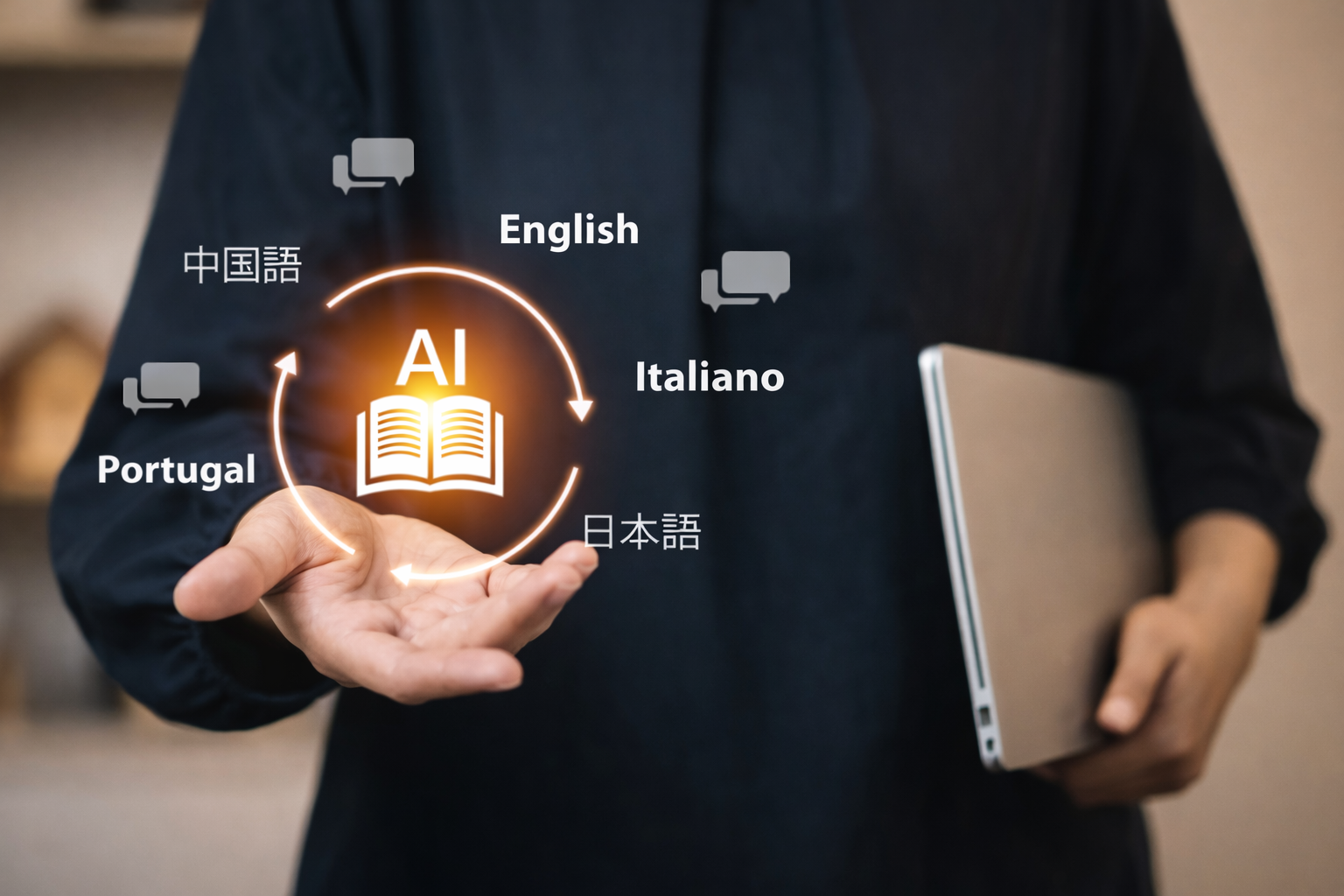
AI speaking practice should then sit between those live lessons, not outside the programme but inside it. It should reinforce lesson goals, increase speaking minutes, and help learners arrive better prepared for higher-value feedback and coaching. This is where technology becomes most useful: not as a replacement for the learning process, but as a force that strengthens continuity.
Progress should also be visible. That means checkpoints, reporting, and a framework that makes improvement measurable. For organisations, this matters because language learning should not disappear into vague claims of engagement. HR and L&D teams need to know who is participating, who is improving, where learners are getting stuck, and how the programme is performing across teams and locations.
This is how learning moves from activity to accountability.
How mYngle applies this in practice?
At mYngle, AI in language learning is not treated as a standalone novelty. It sits inside a broader evidence-based training model built for real communication outcomes.
Learners begin with a CEFR-aligned assessment so there is a clear starting point and a shared understanding of level, goals, and next steps. From there, they join live online language lessons with experienced teachers who adapt sessions to professional context, role, and priorities. Lessons focus on practical communication in real business situations, not generic textbook progression.
Between lessons, learners can build fluency through mYngle Talk AI Speaking Practice. This gives them additional opportunities to speak, rehearse workplace scenarios, strengthen confidence, and increase total speaking time beyond scheduled sessions. It also helps them come to live lessons better prepared, which means teachers can spend more time on higher-level feedback, correction, and refinement.
This model matters because it respects how adults actually learn. It combines active use, distributed practice, teacher feedback, and measurable progression. It is structured enough to create consistency and visibility, but flexible enough to work across time zones, teams, and growing organisations.
For HR and L&D, that creates something essential: a language training programme that can scale without becoming vague.
From language learning to communication performance
The real promise of AI in language learning is not that it makes training more digital. It is that it can make training more usable.
When learners practise more often, receive better feedback, and build confidence between live sessions, they bring more to work. They speak earlier in meetings. They formulate ideas more clearly. They handle conversations with less hesitation. They write with more precision. They become easier to understand, more confident to work with, and more effective in international environments.
That is where business value begins.
For companies, language development should never be reduced to lesson counts or course completion. The real measure is whether employees can communicate more effectively in the moments that matter most. AI can support that shift, but only when it is part of a serious learning design grounded in practice, feedback, and measurable outcomes.
That is the difference between digital activity and genuine capability.
Conclusion
AI is changing language learning, but not for the reasons many people assume.
Its greatest strength is not replacing teachers, automating education, or producing more content. Its greatest strength is increasing active practice, extending learning beyond the live lesson, and helping adults build fluency through consistent use.
When combined with expert teaching, clear assessment, structured progression, and real workplace relevance, AI becomes a serious accelerator of language development. Not because it makes learning easier, but because it makes effective learning more continuous, more practical, and more measurable.
That is the future of AI in language learning.
Not more automation. Better communication.
Ready to see how mYngle AI Talk combines live online language lessons, CEFR-aligned progress tracking, and AI speaking practice to build real workplace communication skills? Contact us to explore a programme designed for measurable results across global teams.

