


Language training is a key investment for organizations in today's global marketplace, but its ROI...
In today’s globalized world, communicating across cultures and languages is essential. Businesses aiming to thrive in diverse markets see language training as a strategic investment However, measuring the effectiveness of this investment isn't straightforward. Understanding and maximizing the Return on Investment (ROI) for language training programs is crucial for supporting strategic decisions and demonstrating value. This guide explores the methodologies and strategies that help HR and L&D professionals calculate and enhance the ROI of their language training initiatives.

Unpacking the Complexity of ROI in Business Language Training
Language training introduces unique variables that influence ROI. Unlike standard training programs, the benefits of language learning extend beyond direct job performance to include improved interpersonal communication and cultural competence—skills crucial for international business relations. These benefits often unfold over a prolonged period as employees apply and refine their new language skills.
Understanding the ROI Components of Language Training
The ROI of language training includes a range of direct and indirect factors that contribute to the overall effectiveness and impact of training initiatives.
1. The Total Costs of Language TrainingA thorough understanding of the costs associated with language training is crucial for accurate ROI analysis. Beyond obvious direct costs like course materials and instructor fees, there are significant indirect and hidden costs that must be considered. These include administrative expenses, opportunity costs, and potential productivity losses.
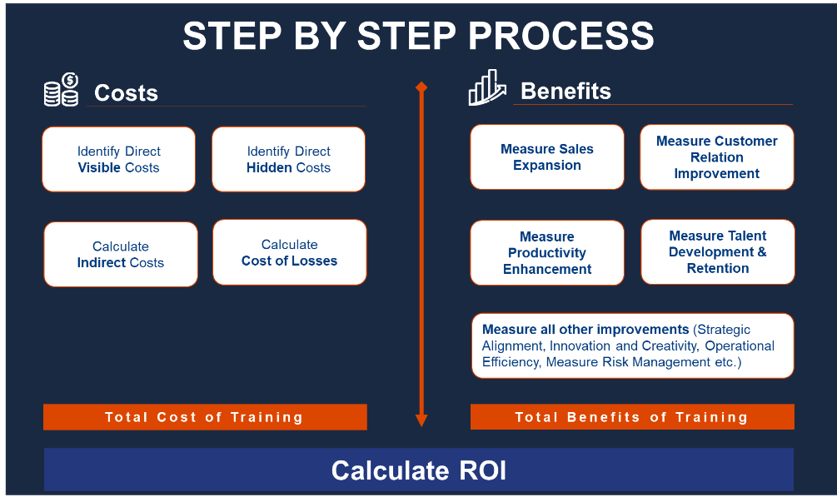
- Direct Visible Costs: Instructor fees, learning materials, and technology used in training.
- Direct Hidden Costs: Session cancellations, learner travel, and course abandonment costs.
- Indirect Costs: Administrative expenses, opportunity costs of time spent by employees in training, and potential productivity losses during the learning period.
- Cost of Losses: Lost productivity and potential errors made by employees applying new language skills.
2. The Real Value of Language Training
While language training may appear to have higher costs due to its specialized nature and the time commitment involved, it's crucial to balance these costs against the potential benefits. Effective language training can lead to improved communication, increased market opportunities, and enhanced customer satisfaction, all of which can significantly contribute to an organization's bottom line. It's a classic case of investing now for future gains.
Main Benefits of Language Training (which can be estimated):
- Sales/Market Expansion: Opens new markets and increases sales.
- Customer Relations Improvement: Enhances interactions and satisfaction.
- Productivity & Collaboration: Streamlines communication and efficiency.
- Talent Development & Retention: Boosts employee development and job satisfaction and engagement.
Extra Benefits of Language Training (more difficult to estimate but good to keep in mind)
- International Projects/Partnerships: Enhances collaboration and increases the likelihood of successful cross-border communication..
- Operational Efficiency: Reduces misunderstandings and enhances problem-solving.
- Innovation and Creativity: Encourages diverse perspectives and innovative thinking.
- Cultural Intelligence: Leads to better business decisions internationally.
The Process: Step-by-Step Approach to Calculating ROI in Language Training
Calculating the ROI of language training requires a systematic approach to ensure accurate and meaningful results. By following a structured process, HR and L&D professionals can effectively measure the impact of their training programs and make informed decisions to maximize their value.

Step 1: Define Objectives and Metrics
Begin by defining specific goals for the language training. These should align with broader business objectives, such as enhancing international client relations or expanding into new global markets. Establish metrics to measure these outcomes effectively.
Step 2: Data Collection
Implement a system to monitor learner progress, gathering data before, during, and after training. This helps in assessing the training's immediate effectiveness and its longer-term impact.
Step 3: Analyse Data and Assign Weighting Factors
Evaluate the collected data to determine the training's effectiveness. This involves comparing pre- and post-training performance metrics and participant feedback. Assign weights to various benefits based on their direct impact on business outcomes.
Step 4: Track Costs
Record all costs associated with the training, including direct expenses like instructor fees and indirect costs such as administrative efforts.
Step 5: Calculate ROI
This crucial step involves comparing total costs with weighted benefits. Here, both tangible and intangible benefits are considered to provide a comprehensive view of the financial return on the training investment.
Step 6: Account for Intangible Benefits
Intangible benefits like improved employee morale and improved team dynamics play a vital role in the success of language training and should be included in qualitative assessments. While they can't be precisely calculated, consider them in the overall evaluation through qualitative assessments to provide a fuller picture of the training's impact.
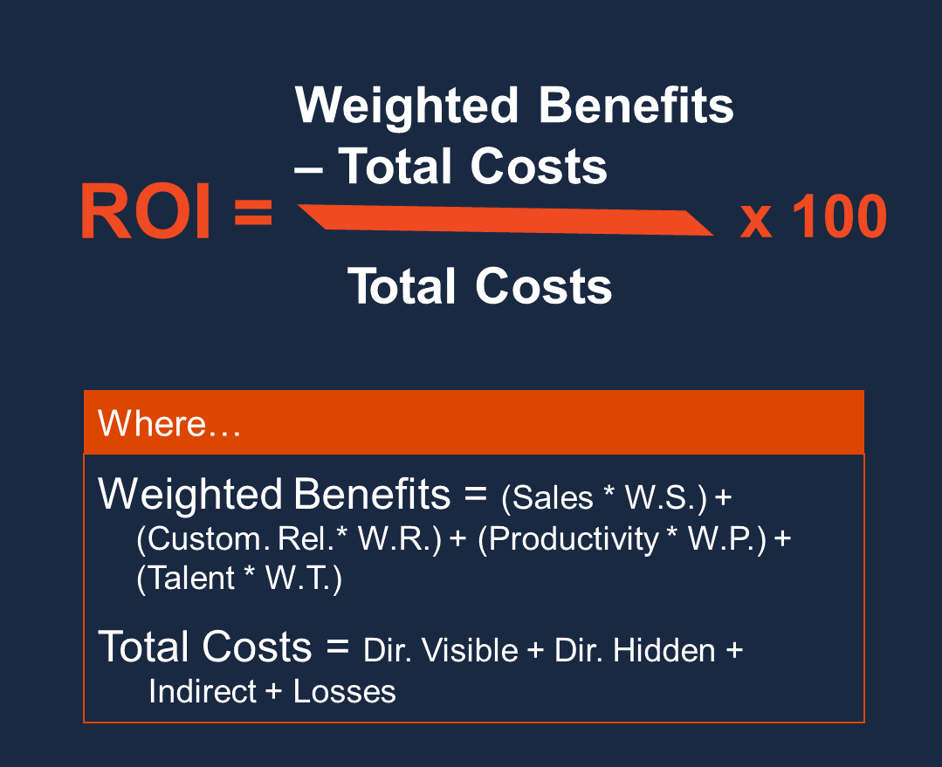
Tailored ROI Formula for Language Training
To address the unique challenges of measuring ROI in language training, a tailored formula is necessary. This formula should factor in a range of benefits—from direct impacts like productivity improvements to more indirect benefits like enhanced cultural intelligence. Additionally, it should include all associated costs, offering a balanced and comprehensive assessment of the investment's value.
Estimating costs is relatively straightforward, as it involves quantifying direct expenses such as course materials and instructor fees. However, estimating benefits is more complex due to the intangible and varied nature of the outcomes.
Applying weighting factors is crucial because they ensure a realistic and accurate calculation of ROI by accounting for varying degrees of impact and certainty. These factors take into account the influence of external factors, the ease of measuring benefits, and the certainty of immediate versus long-term impacts.
- Attribution: Weighting helps estimate the specific contribution of language training by considering the influence by factoring in the effects of other initiatives, such as customer service programs or employee operational improvements.
- Quantifiability: Weighting assists in addressing the challenges of measuring direct benefits, like new market access, versus indirect ones, like team collaboration.
- Certainty: Weighting differentiates between more certain immediate gains, such as language proficiency, and less certain long-term impacts, such as employee retention.
Communicate these assumptions clearly to stakeholders, and when in doubt, it's better to underestimate benefits to provide a conservative and realistic estimate of ROI.
|
Example: German Language Course for an Executive A company invests in a 3-month online German course for an executive, focusing on interactions with German-speaking clients. Here’s a summary of the costs and projected benefits: Costs:
Total Costs: €6,650
Projected Benefits:
Business Outcome Value: €15,800 ROI Calculation: ROI = (€15,800 - €6,650) / €6,650 * 100% = approximately 138% This calculation indicates a significant positive return, suggesting that the investment in language training, is likely to be highly beneficial based on these estimates. |
Conclusion: The Strategic Value of Language Training
Calculating the ROI of language training is more than just a financial metric; it's a strategic tool that helps organizations maximize the effectiveness of their training investments. Understanding the factors that influence ROI in language training enables businesses to make informed decisions aligned with global expansion strategies and workforce development goals.
Language training not only improves individual performance, enhances team dynamics, and boosts customer interactions, but also fosters a more inclusive and culturally competent workforce, essential in today’s globalized business environment. Investing in language training drives long-term business success and competitiveness.
![29. Maximizing ROI in Language Training A Guide for HR and L&D Professionals [ Key Benefits of Language Training for Your Employees]](https://blog.myngle.com/hs-fs/hubfs/29.%20Maximizing%20ROI%20in%20Language%20Training%20A%20Guide%20for%20HR%20and%20L%26D%20Professionals%20%5B%20Key%20Benefits%20of%20Language%20Training%20for%20Your%20Employees%5D.jpg?width=2309&height=1299&name=29.%20Maximizing%20ROI%20in%20Language%20Training%20A%20Guide%20for%20HR%20and%20L%26D%20Professionals%20%5B%20Key%20Benefits%20of%20Language%20Training%20for%20Your%20Employees%5D.jpg)
Contact us today to learn more. Book a demo to see our training solutions in action, or download our comprehensive series "The ROI of Language Training" to explore how language training can transform your business. Visit our website to get started.